


Aphex’s site diary really is easy to use. It’s simpler than other diary tools I’ve used in the past.


The Smith is a heritage redevelopment in Westminster, London. The original stone-clad building, raised in two phases between 1912 and 1929, is being preserved by carefully dismantling, storing, and reinstating its Portland stone façade.
Behind that retained frontage, Skanska is delivering a new nine-storey, 130,000 sq ft office over two basement levels, targeting BREEAM Outstanding, WELL Platinum and Nabers 5*. Skanska is delivering both construction and M&E.
To learn more about how the team used Aphex while delivering such a complex and constrained project, we spoke with Rob Salmon, Construction Manager at Skanska; Hannah Tumbrink, Assistant Planner at Skanska; and Paul Gittins, Project Manager at James & Son Limited.
The challenge: keeping a crowded plan live and accurate
Tall, heritage-constrained jobs put the program under pressure from the first day. Heritage constraints leave little room to improvise, and as work climbs floor by floor up the cores and risers, the site can become crowded with packages all running at once.
The more trades working at once, the faster a plan drifts out of step with the site, and the harder it becomes to see where things actually stand and what is coming next. And this coordination challenge only climbs as a job matures.
Against this backdrop, Skanska is using Aphex on The Smith to make it easier for the team to keep the plan live, accurate, and available as the project progresses.
.webp)
Solution 1: Capture site reality as it happens
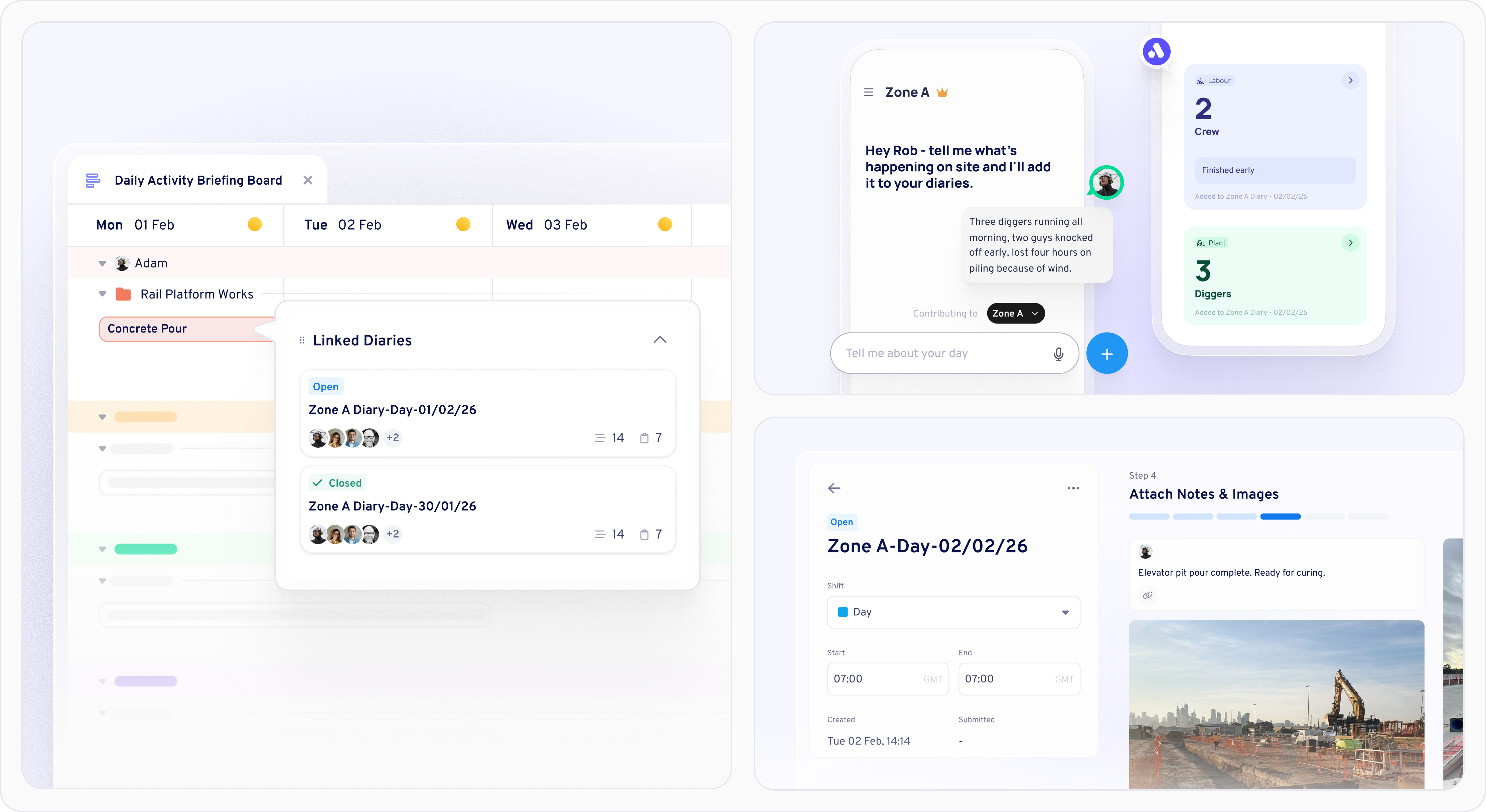
For the Skanska team, the daily site walk is where the diary gets built. Rob and others on the team walk the site with the plan open on Aphex, checking every area they pass against what was meant to happen and logging it as they go.
As Rob and the team explain, capturing site reality while standing in front of it, with the detail still fresh, produces a different record than reconstructing the day from memory back at a desk hours later.
On The Smith, detail is logged while the work is in front of the team, so nobody rebuilds the day from memory. By the time the shift ends, the reality on site is already in Aphex. The team’s view is that this is where the quality of a diary is actually decided.
How to do this with Aphex
The diary sits on top of the plan you are already running in Aphex. Each entry is attached to the related task, so the record and the plan stay linked. When you close out the day, the day’s logged issues are pulled through into the diary automatically, so they don’t need re-entering.
Capture is done from a phone on site. You can add photos, type or dictate comments with voice-to-text, and mark each task with a thumbs up or thumbs down as you walk. More than one person can contribute to the same day’s record, so it doesn’t fall to a single person at a desk.
The activity log holds individual entries, such as a photo with a short caption or a note against a task or area, and these can be added through the day as things happen.
From a site point of view, it’s easy to use and easy to keep updated.
Rob Salmon, Construction Manager
Solution 2: Run a predictable daily routine
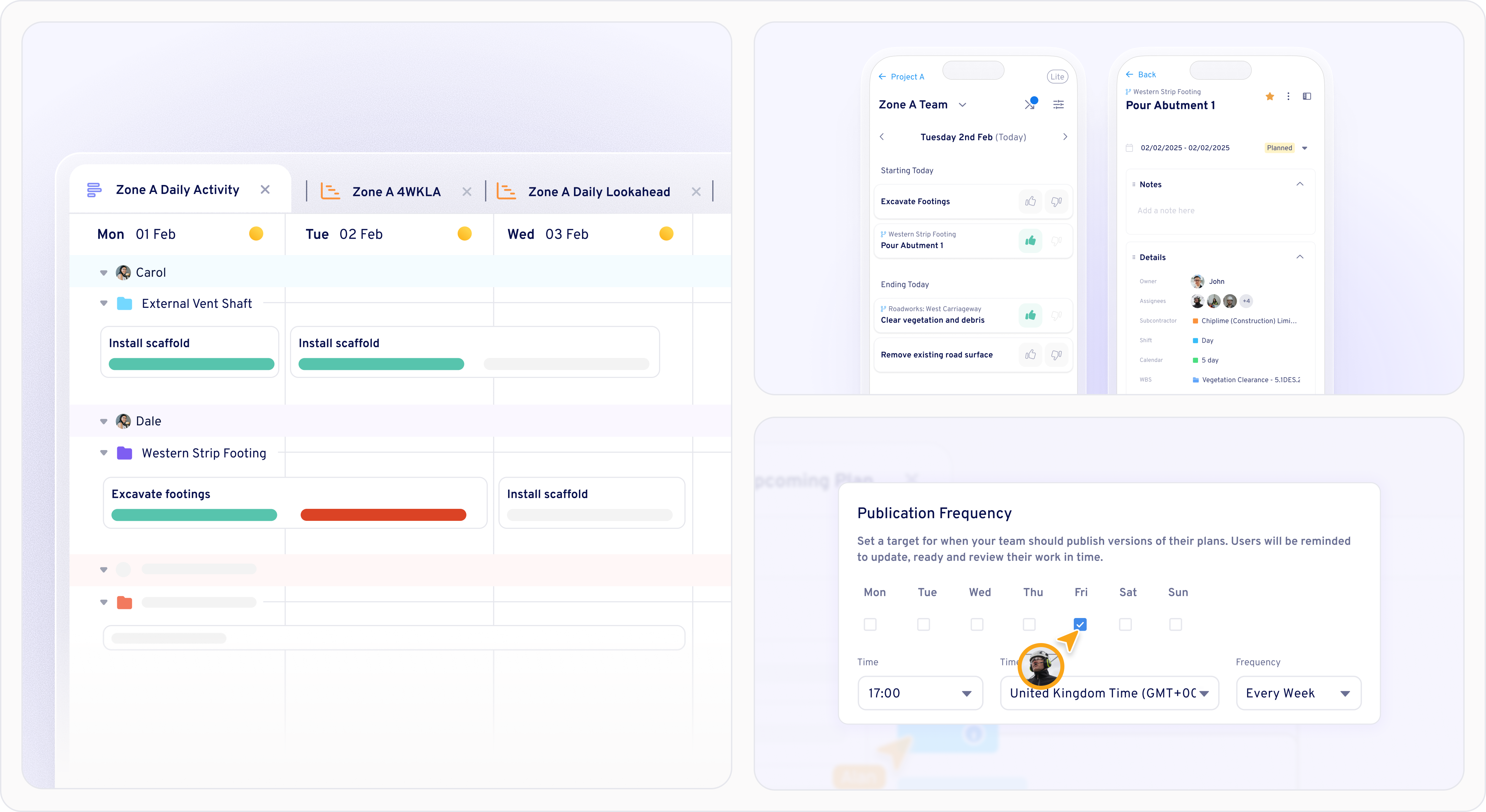
The second discipline the team runs using Aphex is cadence. Two short meetings a day, run against the live plan in Aphex, function as a commit-and-check rhythm, surfacing slippage the same day it happens, while there's still time to do something about it.
The first meeting is a morning check-in, confirming against the plan on Aphex that the labour on site matches what should be happening. The second is an afternoon check on what was actually achieved, marking each task thumbs up or thumbs down in Aphex and logging a delay reason and comment against anything that slipped, forcing the question of how it gets picked up.
A weekly rhythm sits around the two daily meetings. The plan is published and locked in Aphex once a week, so the whole project works from one version between updates, with any blockers raised during the week logged directly against it.
The first challenge comes in the morning: where are you, where’s your labour, what are you doing? Then later, if something hasn’t been achieved, the discussion is about how to bring it back on plan and what mitigation is required.
Rob Salmon, Construction Manager
Solution 3: Subcontractors build and own their own plan
The third discipline the team uses with Aphex is subcontractors building and owning their own plans.
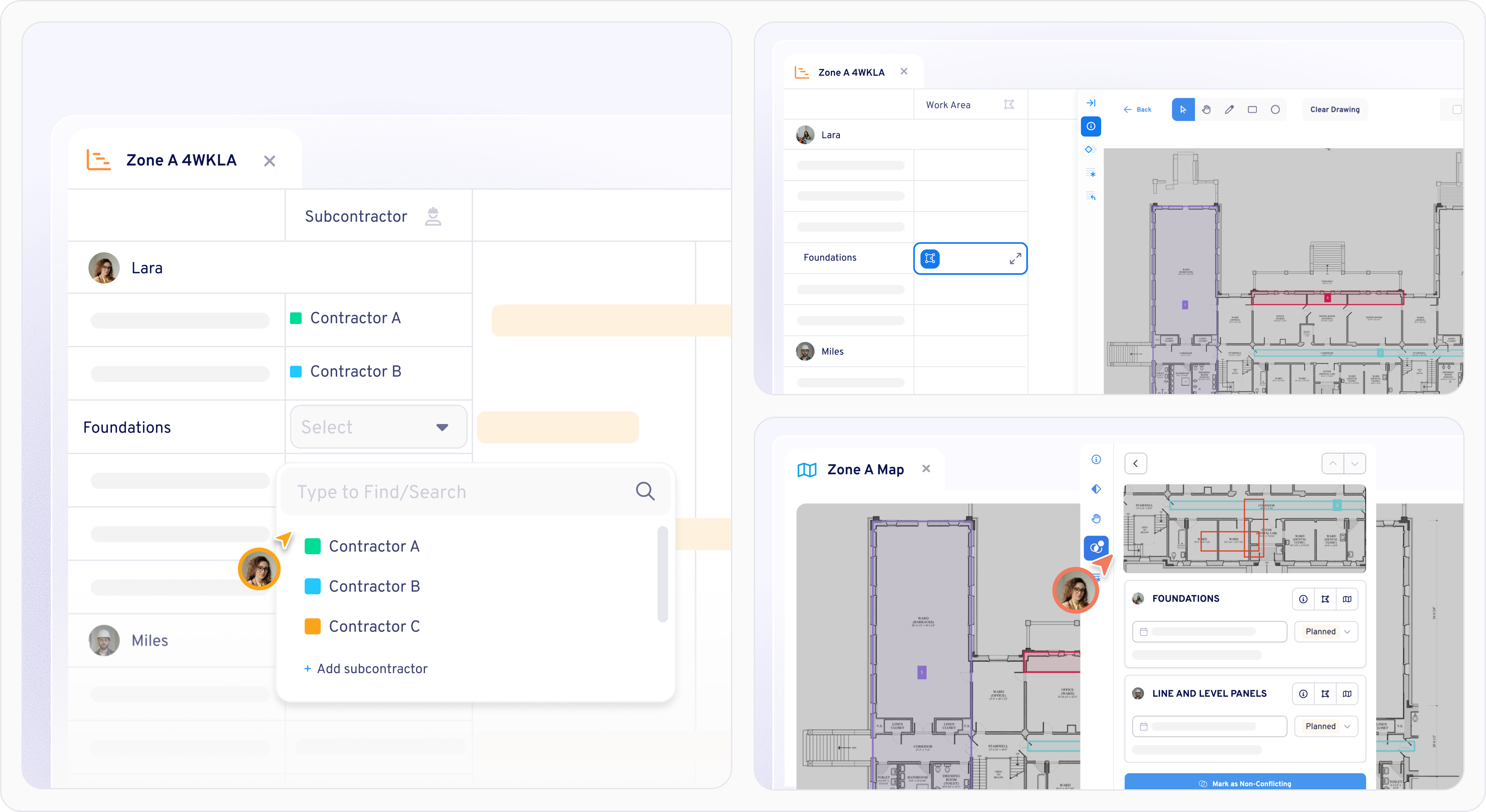
Rather than importing the master schedule and handing each subcontractor their slice of it, Hannah creates a folder structure in Aphex, sets up milestones from a 12-week time-slice of the master schedule agreed with the package managers, and assigns each milestone to the subcontractor who owns it.
From there, each subcontractor builds their own short-term plan toward the milestones they own. This forces both the detail and the ownership that make a short-term plan useful. If a subcontractor misses, it shows.
But it cuts the other way too: blockers raised against another trade or another area stay logged, and that record carries through to the final account. For a subcontractor, that means the proof of what held you up, and where, is there when it matters.
If there’s an issue where another trade or another area is a problem, you can highlight that on Aphex. When it’s on Aphex, it’s all there. You know what’s happened, you’ve got your proof, where you are and what’s held you up.
Paul Gittins, Project Manager, James & Son Limited
How to do this with Aphex
Create the folder structure and set up milestones from your master schedule. Subcontractors then build their own short-term plans toward those milestones.
As the quality of the mark-up improves, the collaboration meetings can move from line-by-line review in the Gantt view to the map view, looking only at the areas that clash and the blockers raised, using clash detection in the drawings to find them.
Blockers are logged against the plan as they arise, and the plan is published so everyone is working from the same version.
Aphex works best if everyone puts in good information. So you need everyone on the team to be on Aphex early on, understand it, and stand behind it.
Hannah Tumbrink, Assistant Planner
The results so far
As with other effective ways of working, the team’s approach on the project has been shared internally at Skanska through a planners’ forum and site visits from other project leads. Other results include:
- A live, daily record has replaced the weekly update. The project has an accurate record built up day by day, so the plan reflects the state of the site at any given moment rather than a snapshot a week old.
- The supply chain builds and owns its own plans. Set as the standard from the start, the whole supply chain now builds and owns its own short-term plans.
- Transparency and a defensible audit trail. Blockers and delays are captured with proof as they happen, held in one place against the plan. Nothing gets watered down or forgotten by the time the final-account meeting comes around.
What you can apply
- Set the standard from day one. Make the live plan non-negotiable before old habits have a chance to form.
- Make subcontractors build their own plan. Detail and ownership come from building a plan toward your own milestones, not from being handed a program you will never look at.
- Capture reality in the moment. A photo, a comment, or a voice note taken while you are standing in front of the work beats reconstructing the week from memory at a desk.
- Protect the tempo of the room. A good daily meeting keeps information flowing freely between trades. The weekly cadence only works as long as people are willing to speak openly in it.

Heading
Lorem ipsum dolor sit amet, consectetur adipiscing elit. Suspendisse varius Duis cursus,

%20-%20Grey.svg)
.webp)