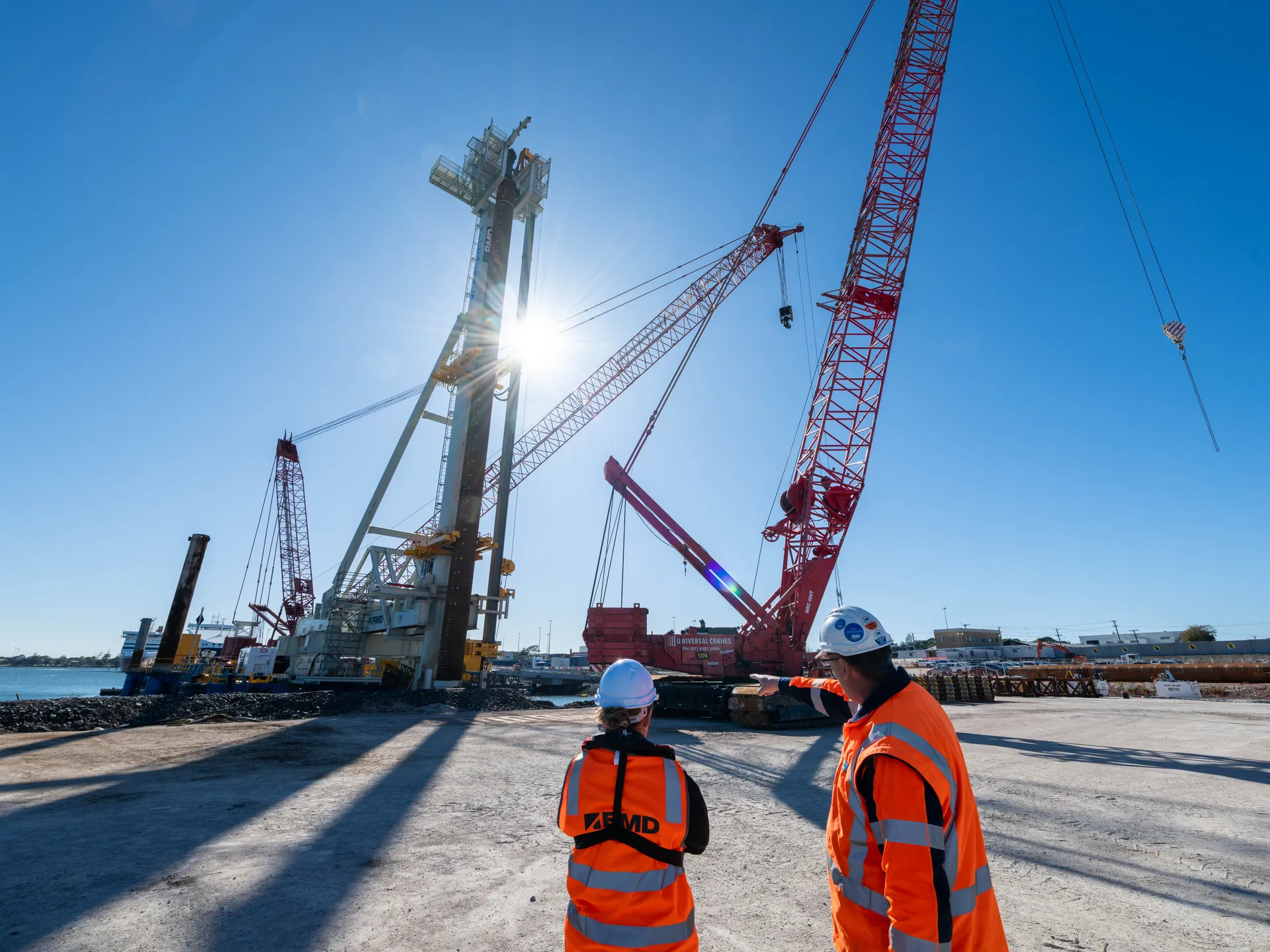
The biggest thing for us is Aphex started conversations that were never there before. And it gave people confidence, because whoever is in charge of a section is the one who speaks to whether it was done. That ownership matters.


McConnell Dowell is delivering critical new water and wastewater infrastructure to support growth across a major residential development. The project includes large-diameter pipelines, storage reservoirs, and pump stations, spanning multiple separable portions and serving communities expected to grow substantially over the coming decades.
Managing up to 17 simultaneous work fronts across a wide geographic area, the team kept everyone aligned and focused on delivery.
To learn more, we spoke with the team at McConnell Dowell.
The challenge
At peak, the McConnell Dowell team was managing up to 17 active work fronts simultaneously, spread across a wide area, some five minutes apart, others up to forty minutes away along rough access tracks. The work was highly varied: pipeline installation, reservoir walls and pours, pump stations, and bypasses, delivered partly by McConnell Dowell's own crews and partly by subcontractors.
The weather compounded everything. Rainfall far exceeded historical averages, flooding open trenches and shutting down work fronts for days at a time. And with so many parties in play, keeping everyone genuinely aligned was a challenge.
The team needed a way to get everyone working from the same picture, without creating more meetings or administrative overhead.
%20(2).webp)
Solution 1: Distribute ownership of the schedule
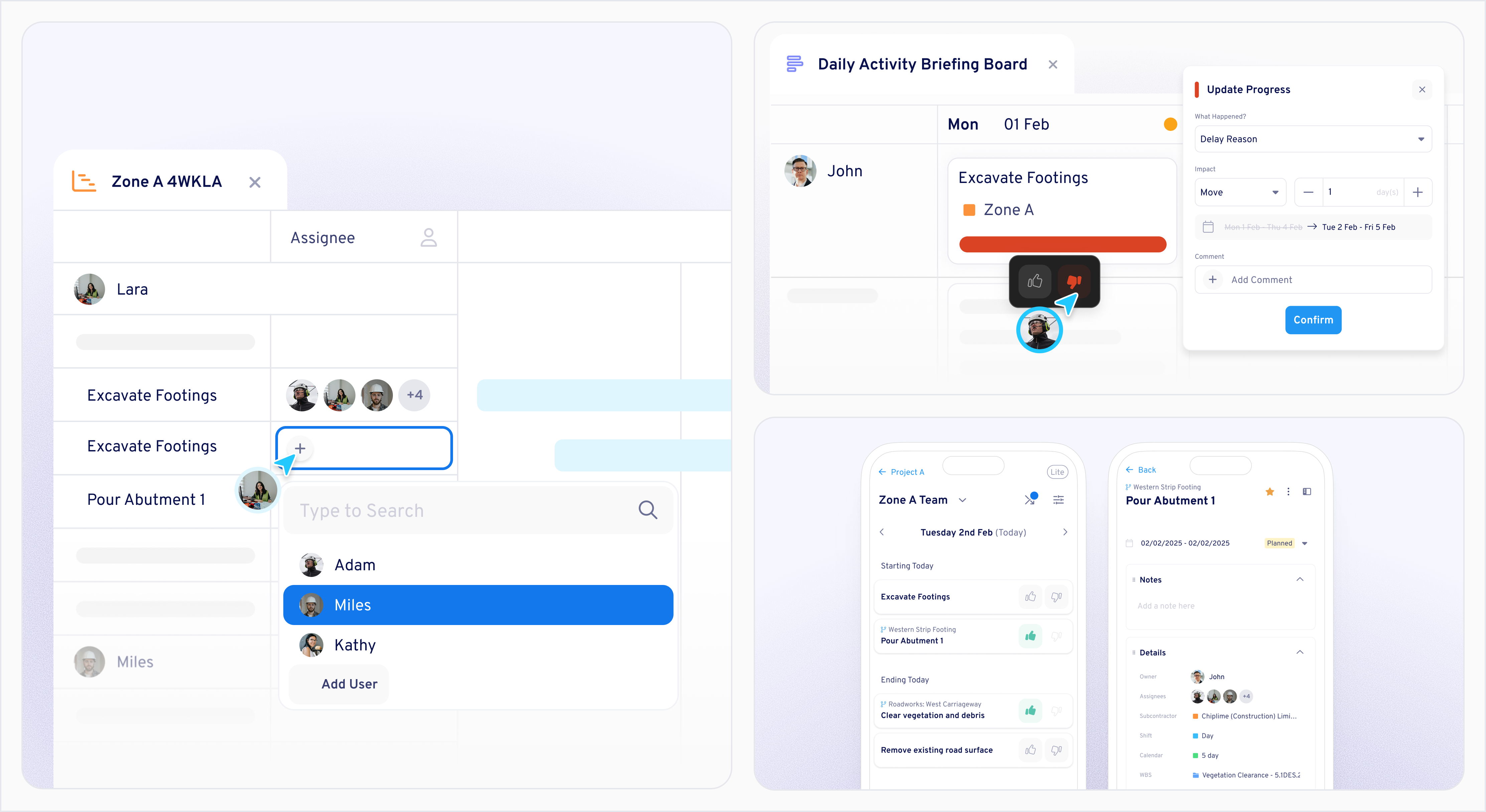
Rather than a central planner gathering updates from each team, the McConnell Dowell team ensured that everyone with a stake in delivery would own their piece of the schedule and update it themselves.
McConnell Dowell introduced Aphex to support this. Engineers, supervisors, quality and safety staff, and subcontractor representatives all dial into a daily review. Before Aphex, that meeting required an hour working through Excel spreadsheets. Now it takes around ten minutes, because the data is already current when the meeting starts.
That visibility also changed how people reported. With updates traceable to individuals and the benefits of a single live plan widely understood, the culture shifted toward reporting actuals.
As a further benefit, the planner’s monthly P6 updates, previously reliant on hour-long sit-downs with each area manager, became much faster. Because the team had been maintaining a live, accurate picture of progress throughout the month, the information needed for reporting was already captured and ready to act on.
Aphex has done really well in bringing everyone together. Before Aphex, we used to take an hour going through spreadsheets. That was woeful compared to the data that we've got now on a daily basis.
Planner at McConnell Dowell
How to implement with Aphex
Assign ownership of tasks to the engineers and supervisors responsible for delivery. Aphex's thumbs-up/thumbs-down update mechanism is simple enough for anyone to use in the field, with no dedicated planner required for day-to-day progress reporting. When tasks are updated, the impacts on dependent work are immediately visible across the whole team.
Because all updates are traceable to the person who made them, the system naturally builds accountability. There is no ambiguity about who reported what, and no risk of someone overwriting data without a record. For the planner, that traceability also makes month-end P6 updates straightforward: rather than chasing each area manager for a status conversation, the information is already captured and ready to act on.
Solution 2: Use daily reviews to solve problems, not just surface them
Once the schedule reflects reality, coordination meetings change entirely. The question stops being "where are we?" and starts being "what do we do about it?"
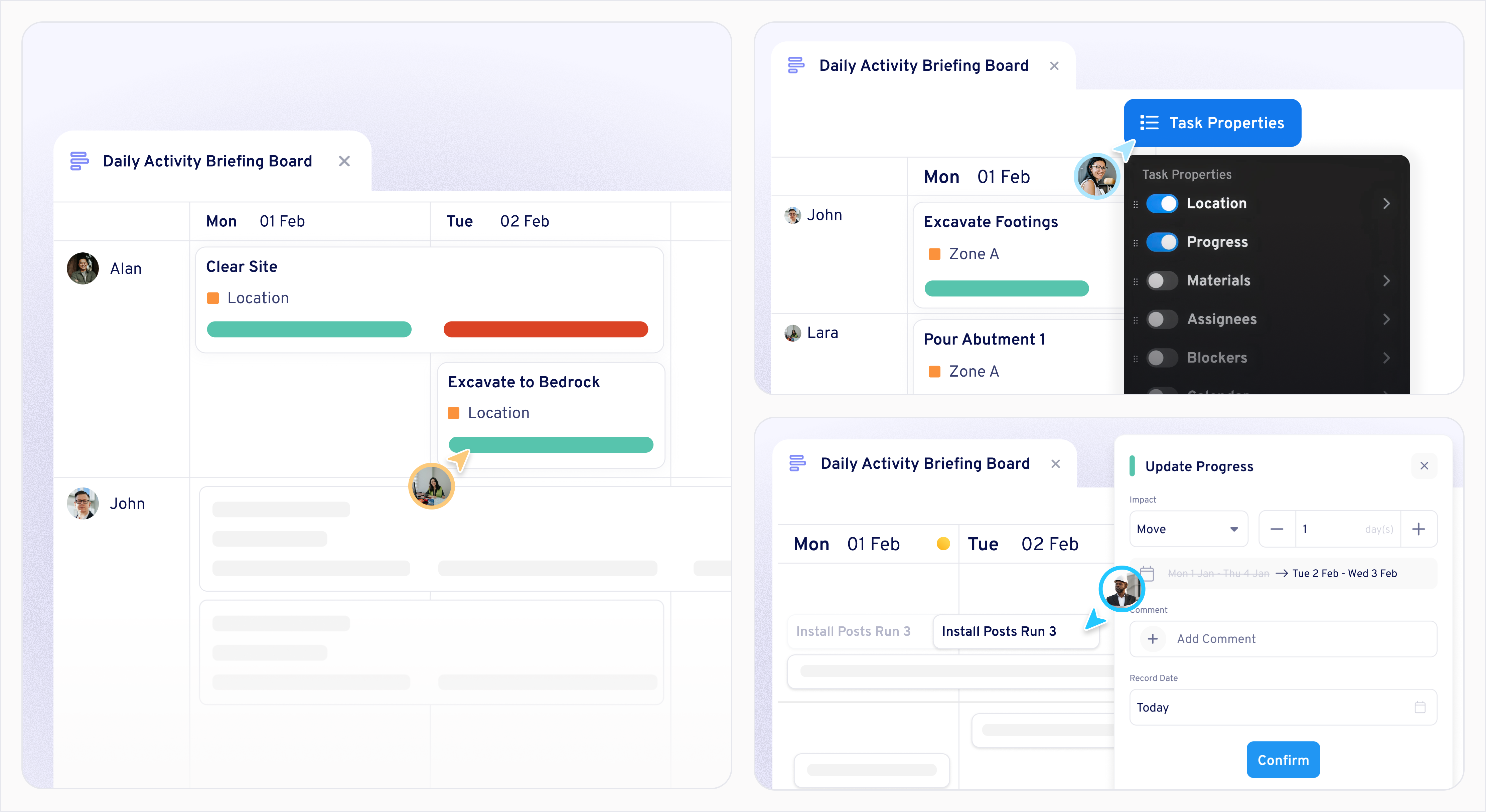
The team uses the daily review to look at the board view together, considering not just near-term tasks but resource allocation across the week. For example, a subcontractor with half a day's work at one site might be needed somewhere else. A supervisor freed up by a works change can be redeployed before the day is lost.
Part of what makes this work is who is in the room. Because the project manager, supervisors, engineers, and subcontractor representatives are all on the same call, someone can usually step up when a problem is flagged. If a risk is raised that one person hasn't spotted, someone else might have exactly the expertise or capacity to address it. As a result, problems that might have sat unresolved between weekly meetings get picked up and acted on the same day.
Ever since we got Aphex, people are a lot more accountable. Whether you're from quality, safety, engineering, or supervision. Everyone knows what the other is reporting on.
Planner at McConnell Dowell
How to implement with Aphex
Use Aphex's board view in daily or weekly coordination reviews to give the whole team a shared visual of near-term work. The board makes resource loading visible across days and work fronts simultaneously, so gaps, conflicts, and reallocation opportunities are obvious rather than buried in a spreadsheet.
When an activity shifts or a resource becomes available, changes can be made directly in the meeting and are immediately visible to everyone. This means the team leaves each review with a current, agreed plan rather than a list of actions to be reconciled later.
Solution 3: Open up communication with clients and subcontractors
Once the schedule is live and reliable, sharing it becomes straightforward, and the benefits extend well beyond the internal team.
The project team made an early decision to be open with both the client and subcontractors. The philosophy is straightforward: if the plan accurately reflects what is happening on the ground, there is no reason not to share it. Subcontractors are brought into the daily meeting as they come on board, giving them direct visibility of the works they are responsible for and a clear picture of what is expected and when.
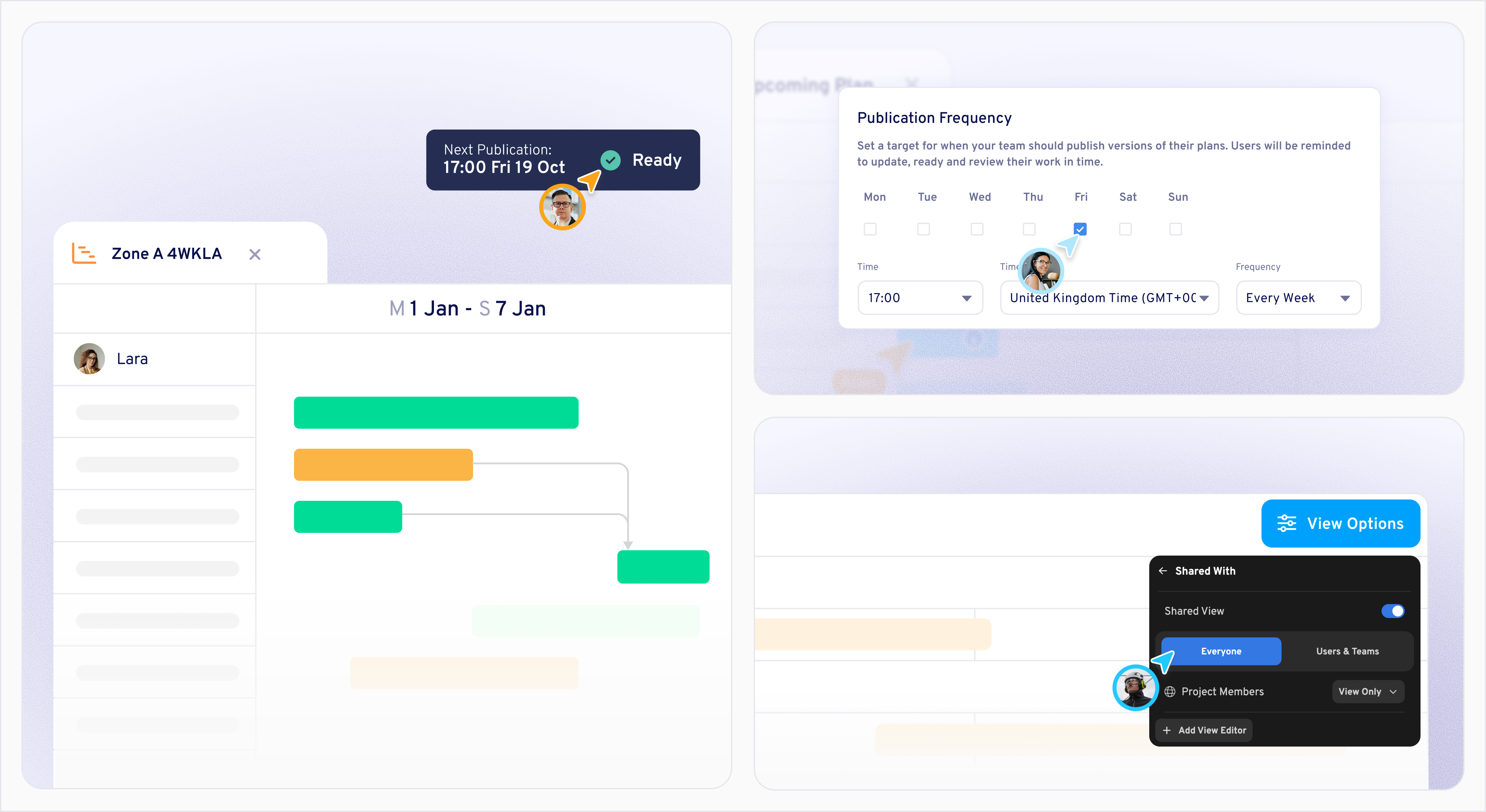
On Friday mornings, the team runs a regular review with the client and superintendent using the three-week schedule view directly in Aphex.
How to implement with Aphex
Use Aphex's publishing workflow to create a regular cadence of shared plan updates. Each published plan creates a timestamped snapshot that can be distributed to the client, printed for site reference, or shared with subcontractors, giving everyone a consistent view without exposing the full complexity of the internal program.
Establishing a fixed publishing day each week creates a predictable rhythm that external parties quickly come to rely on. Rather than chasing the team for updates, the client knows they will receive a current plan on a set day. That predictability, as much as the content itself, helps build confidence in the project team.
The results
The shift to distributed ownership and transparent communication had measurable effects across the whole project.
- Meetings replaced by ten-minute daily reviews. The team gets through all active work fronts, surfaces issues, and reallocates resources in a single brief daily window.
- Faster, cleaner handovers. Updates, task notes, and progress history are recorded in Aphex, giving new team members a searchable, traceable record to work from that simply would not exist in a spreadsheet or a P6 file.
- A client relationship built on transparency. Consistent, live schedule visibility contributed to a project dynamic that the whole team describes as unusually collaborative, and earned formal recognition from the client.
The biggest thing for us is Aphex started conversations that were never there before. And it gave people confidence, because whoever is in charge of a section is the one who speaks to whether it was done. That ownership matters.
Planner at McConnell Dowell
What you can apply
- Make real data the starting point, not the goal of your meetings. Coordination meetings shouldn't be about establishing what has happened. Make updates easy enough for everyone to do as work happens, so your meetings can focus on what comes next.
- Distribute ownership at the level work actually happens. Giving engineers and supervisors direct ownership of their tasks builds accountability across the whole team.
- Use transparency as a coordination tool with clients and subcontractors. When the data is shared and up to date, conversations can focus on solving problems together rather than establishing the facts.
- Think about the project you're leaving behind. A well-maintained planning record is one of the most underrated deliverables on a construction project, and a resource for everyone who follows.

Heading
Lorem ipsum dolor sit amet, consectetur adipiscing elit. Suspendisse varius Duis cursus,

.webp)

.webp)