
Aphex made it easy to see potential issues, delays, and knock-on impacts, and communicate all of that simply to the team.


Major infrastructure programmes often involve design and pre-construction work spread across multiple teams, disciplines, and locations. When these teams operate independently, coordination issues arise that can consume months of programme time, often going unnoticed until it's too late.
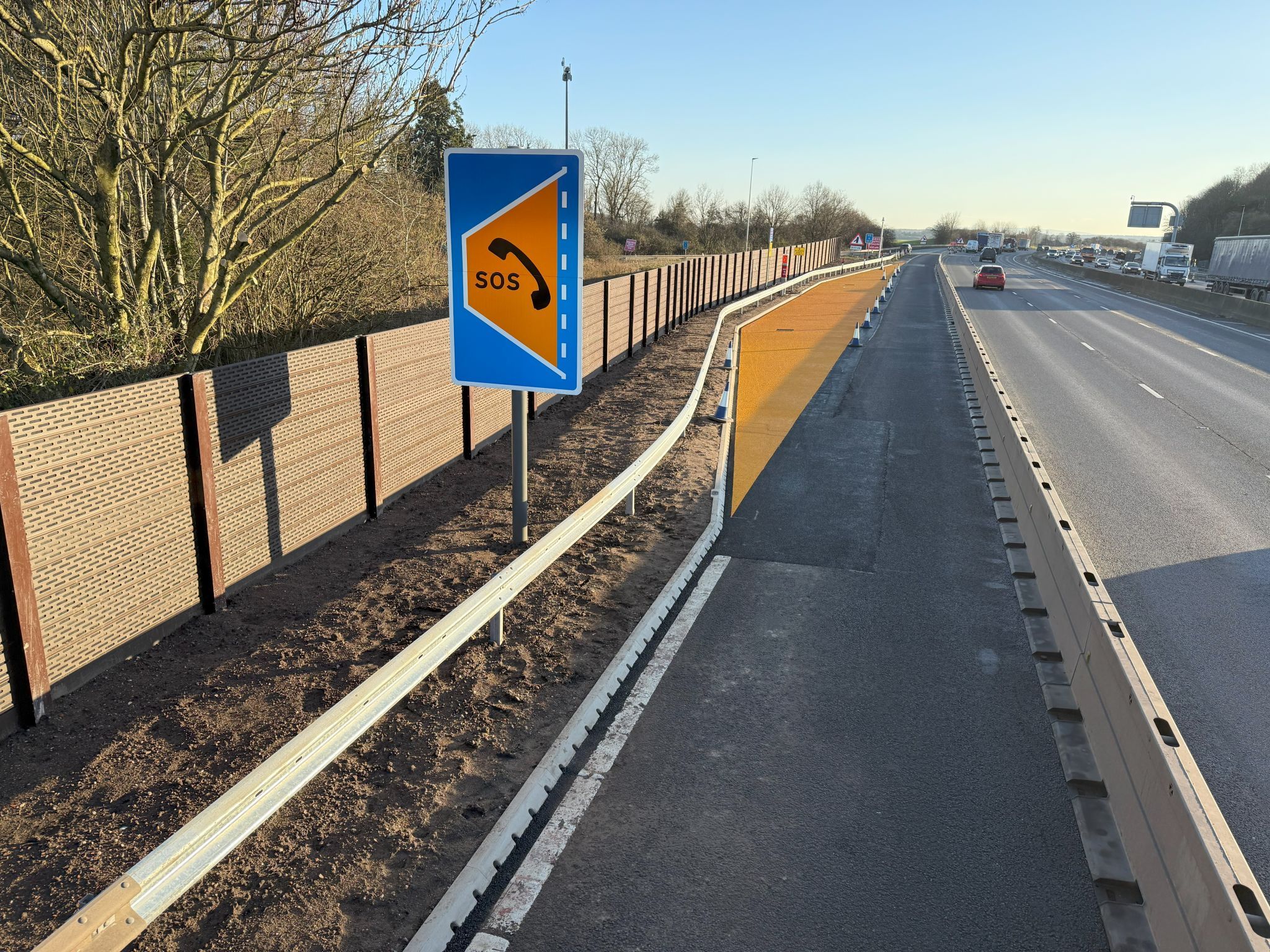
The Smart Motorways Programme Alliance (SMP Alliance) faced this exact challenge when delivering the NEAR programme: 138 emergency areas across thirteen schemes, with design work distributed among five separate design teams comprising multiple disciplines from two different organisations.
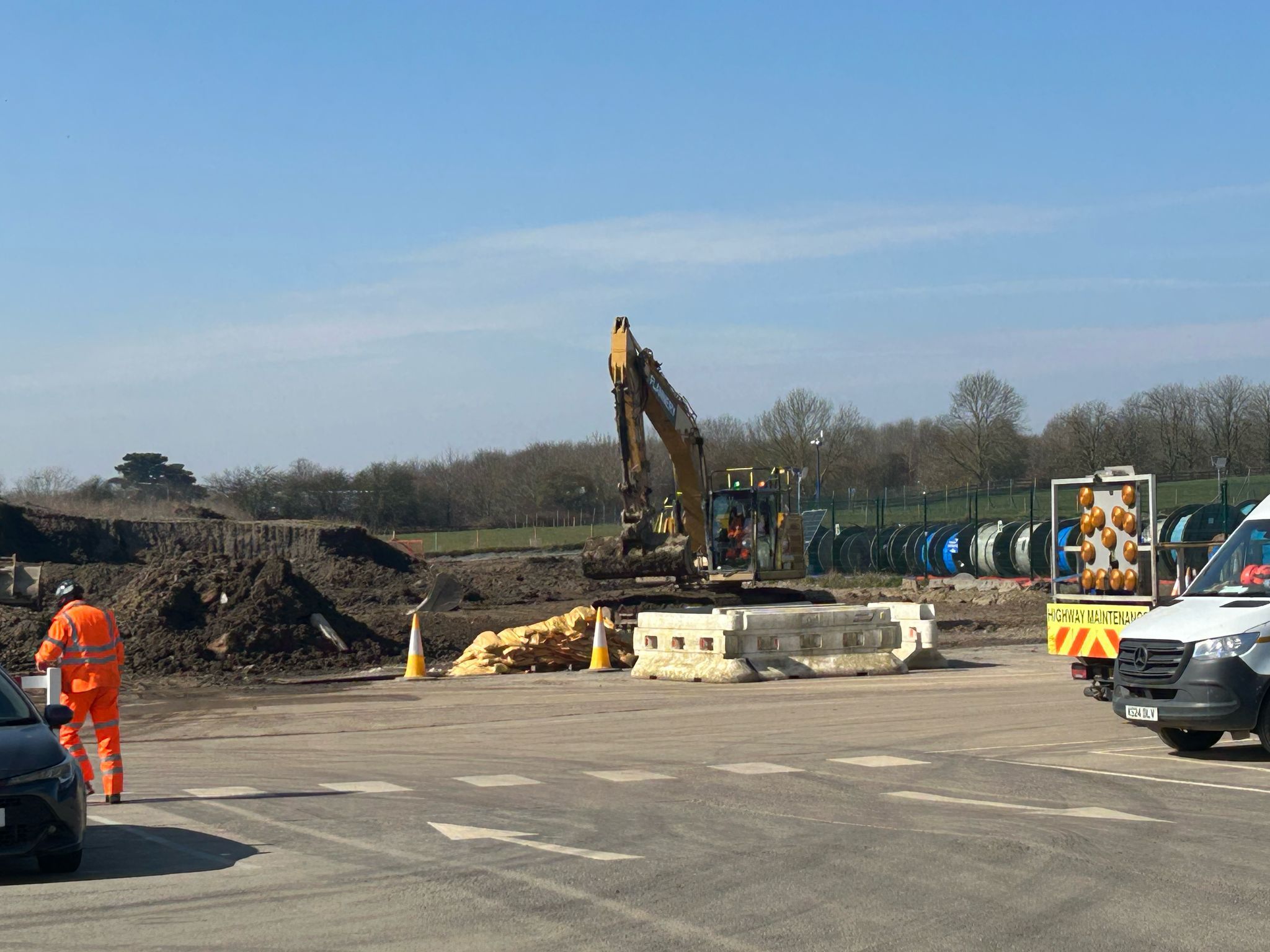
At the peak of construction, approximately 100 emergency areas were being built simultaneously, representing around £30 million per month and over 1,000 people working across the programme.
We spoke with Oliver Firth, who led planning for the NEAR programme through pre-construction, construction, and into handover, about how the alliance maintained control across this complex, distributed programme.
The challenge of preconstruction coordination on distributed programmes
When multiple design teams work across different offices and organisations, each tends to develop its own spreadsheets, programmes, and ways of tracking work. What works well for individuals or small teams breaks down when coordination is required across a larger programme.
The nature of design work itself compounds the challenge. Physical construction is visible and measurable. You can see whether the work is done. Design progress is harder to track.
Teams report being "90% complete" without knowing when they'll actually finish, and this ambiguity allows problems to remain hidden until they've already caused delays. Monthly reporting cycles mean issues can compound for weeks before anyone notices, and by the time problems surface, significant time has been lost.
During preconstruction, you can lose a month in a month. You assume something's being done, you check in, and it turns out it's not, and they can't finish it because they're waiting on something else. Before you know it, you've lost a month.
Oliver Firth, Planning Lead, SMP Alliance
The Alliance's approach
The alliance's solution centred on establishing rigorous weekly planning routines that would work across all teams and phases, from design through construction and into handover.
The key insight was that pre-construction work requires the same disciplined approach as construction, even though the work is less visible and harder to measure. By treating design tasks with the same rigour as physical construction activities — with clear ownership, weekly accountability, and transparent progress tracking — the team could identify and address problems before they compounded into major delays.
With Aphex, we've established a culture where everyone knows: this is the plan, this is what we're working to. People are looking at the week ahead. As a result, the engagement with the plan has been excellent.
Oliver Firth, Planning Lead, SMP Alliance
Solution 1: Establish rigorous weekly cycles with clear accountability
The alliance recognised that monthly programme updates left too much time for problems to accumulate unnoticed. They implemented a weekly cycle where every task had a clear owner responsible for reporting progress.
For the design teams, this meant establishing specific weekly commitments. The team focused on whether tasks were completed, a metric that clarified actual progress.
The approach required persistent effort to embed. The alliance focused on ensuring updates were delivered accurately and on time, and over several months, this discipline became part of the team's working culture.
Design managers found the approach gave them visibility they hadn't had before. They could see what their discipline leads had committed to and whether those commitments were being met, helping the entire programme stay on track.
Within our team, we can now look at the plan and take it as 99% right. I always think of how much time people spend calling or emailing to ask, 'Can you let me know how this is getting on?' Whereas now, everything you need to know is there, updated weekly.
Oliver Firth, Planning Lead, SMP Alliance
How to implement in Aphex: Publishing routines and promises
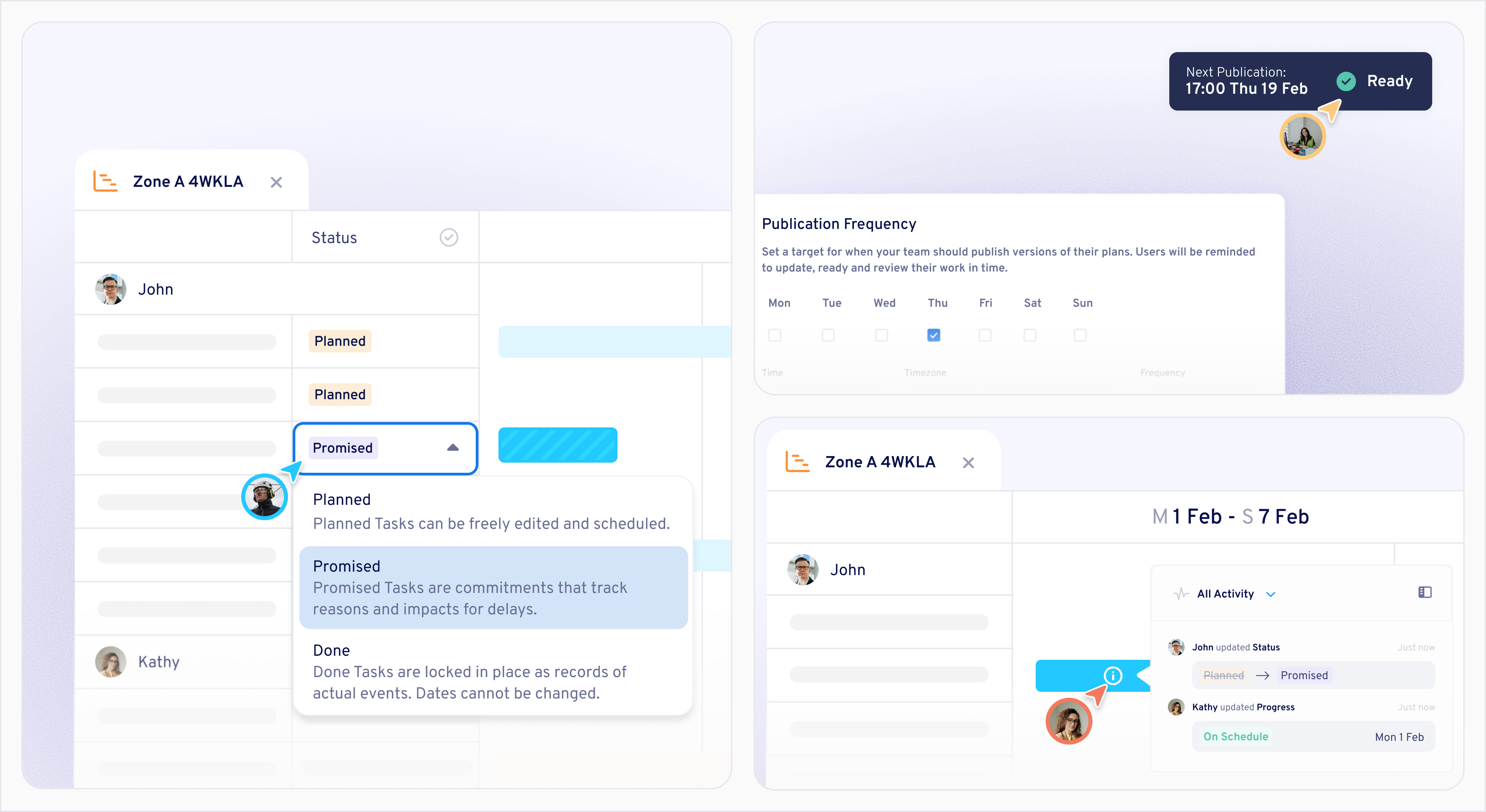
Establish a weekly publishing cycle in Aphex to build accountability and capture the programme's evolution over time. Each week, require task owners to confirm their commitments for the upcoming period.
Use Aphex's promise functionality to establish clear weekly commitments. When tasks are promised, owners make explicit commitments. This shifts conversations from "how far along are you?" to "did you deliver what you said you would?"
When promised tasks aren't completed, Aphex requires users to log the reasons for the delay. This builds a systematic understanding of what's actually driving programme variance, rather than discovering problems only at month-end reviews.
Configure publishing schedules so that timestamped snapshots are created regularly. These published versions create an audit trail of the programme's evolution, supporting both operational coordination and any commercial discussions arising from delays.
Aphex gives us clarity each week on what's been committed to and whether it's been done. We're not chasing updates anymore. We're using the data to remove barriers and keep the programme on track.
Oliver Firth, Planning Lead, SMP Alliance
Solution 2: Create a transparent, shared plan across all teams
With five design teams spread across different offices and organisations, the alliance needed a way to ensure everyone was working from the same information. The traditional approach, in which each team maintains its own view of the programme, creates silos that hinder effective coordination.
The alliance established a single, transparent plan accessible to all teams. This visibility helped people understand where they fit within the overall picture and prompted discussions that might otherwise never have occurred.
The benefit was particularly valuable given the distributed nature of the teams. Many people were working remotely and didn't necessarily know all their colleagues across disciplines or teams. Having a shared, visible programme created common ground and a shared language for coordination.
Dependencies between disciplines became visible. When a drainage designer saw they were waiting on structural outputs, they could proactively reach out rather than discovering the delay at the next monthly review. The plan prompted conversations that needed to happen.
A visible, accessible programme helped people understand where they fit in and prompted discussions that needed to happen. It's basic, but that's the reality of big projects. People don't all know each other.
Oliver Firth, Planning Lead, SMP Alliance
How to implement in Aphex: A shared, live plan
Create a single Aphex environment where all team members can see the overall programme and their place within it. Rather than maintaining separate plans for each team or discipline, establish a single live plan that everyone can reference.
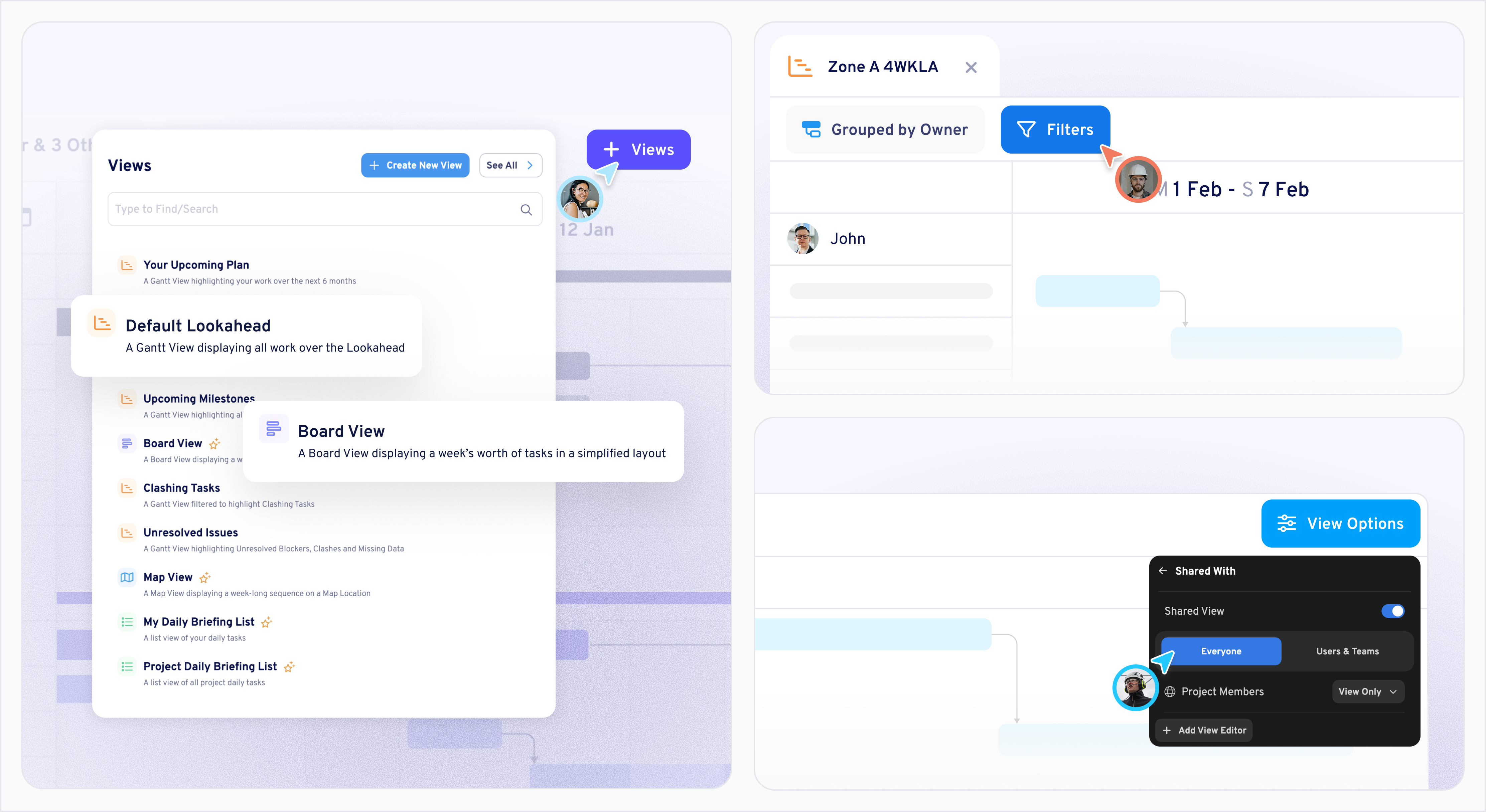
Use views and filters to enable different teams to focus on their respective scopes while maintaining visibility into dependencies and interfaces. Design leads can see their team's work in context, understanding what they're waiting for and what others are waiting on them to deliver.
Structure weekly meetings around the Aphex plan rather than separate reports or spreadsheets. When everyone is looking at the same information, discussions focus on solving problems rather than reconciling different versions of reality.
Encourage adoption by demonstrating wins. As teams see the benefits of shared visibility, resistance typically decreases. The design managers who understood the approach became advocates, helping drive adoption within their teams.
After implementing Aphex, the feedback from PMs is that people are genuinely engaged with the plan. That's what happens when there's a single clear plan that everyone's looking at every week.
Oliver Firth, Planning Lead, SMP Alliance
The results: Engagement, visibility, and time savings
The alliance's approach to structured weekly planning delivered measurable improvements across the programme:
- Greater engagement with the programme. Team members who were initially sceptical became advocates for the approach. The shared plan created accountability and prompted coordination that wouldn't have happened otherwise, and PMs reported unprecedented levels of engagement.
- Significant time savings. Weekly updates eliminated the scramble for information at month-end. The plan was already there, so no one needed to create separate lookaheads or reports. Planners could focus on analysis and forecasting rather than chasing progress data.
- Confidence in programme accuracy. The programme became a reliable source of truth. People could trust what it showed without needing to verify through calls and emails, because it was fed by systematic weekly data rather than occasional updates.
Their approach also enabled the team to use programme data to support difficult conversations, whether explaining issues to the client or addressing performance problems with specific teams. Clear, consistent data replaced anecdote and opinion.
Aphex has saved us a lot of time and effort. We've also got reliable data about how the project is actually performing. That's helped us explain issues to the client and have honest conversations with teams. You can immediately see what's happening with Aphex. There's no ambiguity.
Oliver Firth, Planning Lead, SMP Alliance
What you can apply: Three principles for pre-construction coordination
- Apply the same weekly routines to pre-construction as construction: Design and pre-construction work is harder to measure than physical construction, but they require the same disciplined approach. Establish clear task ownership, weekly accountability, and binary progress tracking (done or not done) rather than percentage estimates that allow work to drift.
- Create visibility across distributed teams: When teams are spread across different offices and organisations, coordination doesn't happen naturally. Establish a single, transparent plan that everyone can access. Visibility prompts conversations and creates a shared understanding that separate plans cannot achieve.
- Invest in embedding the routine: Structured weekly planning requires persistent effort to establish. Expect resistance and be prepared to dedicate resources to driving adoption. The benefits compound over time as the discipline becomes embedded in team culture.

Heading
Lorem ipsum dolor sit amet, consectetur adipiscing elit. Suspendisse varius Duis cursus,

.webp)



.webp)
