
With Aphex, the team actually found the clashes themselves and brought them to our attention. As a result, we met every single access date for the baggage supplier.


Heathrow's Terminal 4 baggage system replacement project faced a six-year delay due to COVID-related closures, leaving the airport with a critical screening capacity constraint that was blocking its expansion plans.
The challenge was significant: strip out and replace the entire steel platform structure while keeping the terminal operational throughout construction.
Working phase by phase to maintain live operations, Mace's project team needed to coordinate 13 supply chain partners in tight, congested spaces where electrical contractors, scaffold workers, steel installers, and baggage system teams were constantly at risk of clashing.
We spoke with Graham Vinters, Senior Planner at Mace, who led the coordination effort that delivered the project twelve months ahead of schedule.

The challenge with working in airport environments
The project had all the hallmarks of what makes airport construction so difficult to coordinate. The team could work only one phase at a time in the live terminal, requiring daily coordination among 13 supply chain partners. Potential clashes between suppliers was a constant consideration for the project team.
Noting the project's importance, Heathrow Airport Limited (HAL) leadership challenged the team to think outside the box to improve delivery timelines.
The answer lay in changing how the team coordinated day to day. What emerged was a new approach built on three pillars: disciplined daily rhythms, distributed ownership of planning, and visual coordination that made problems visible before they reached site.
People need to leave coordination meetings with clarity about the work ahead, and that was the challenge we met at T4.
Graham Vinters, Senior Planning Manager
Run disciplined coordination routines
The team ran visual, collaborative "morning prayer" coordination meetings that met suppliers where they were, using tools they could actually understand and engage with. The team implemented a two-tier planning rhythm: detailed two-week lookaheads combined with eight-week blocker meetings to identify constraints early.
Coordination meetings used a dual-screen setup, with one screen displaying the Gantt chart and the other showing the map, allowing suppliers to visualise exactly where work was happening as they discussed their schedules. During these meetings, time was dedicated to ensuring all data, including location data, was captured in the planning system so everyone was on the same page.
This enabled better decision-making and rapid progress, supported by a collaborative partnership with HAL. The team reviewed resequencing options and assessed operational impacts together. When the new phasing plan introduced operational risk requiring manual product movement, collaboration across HAL projects and operational teams became vital.
We were holding day-to-day ‘morning prayer’ coordination meetings in which we made sure everyone knew exactly what they were doing, and all issues were addressed ahead of time. As a team, we were purely focused on delivery.
Graham Vinters, Senior Planning Manager
Running coordination routines with Aphex
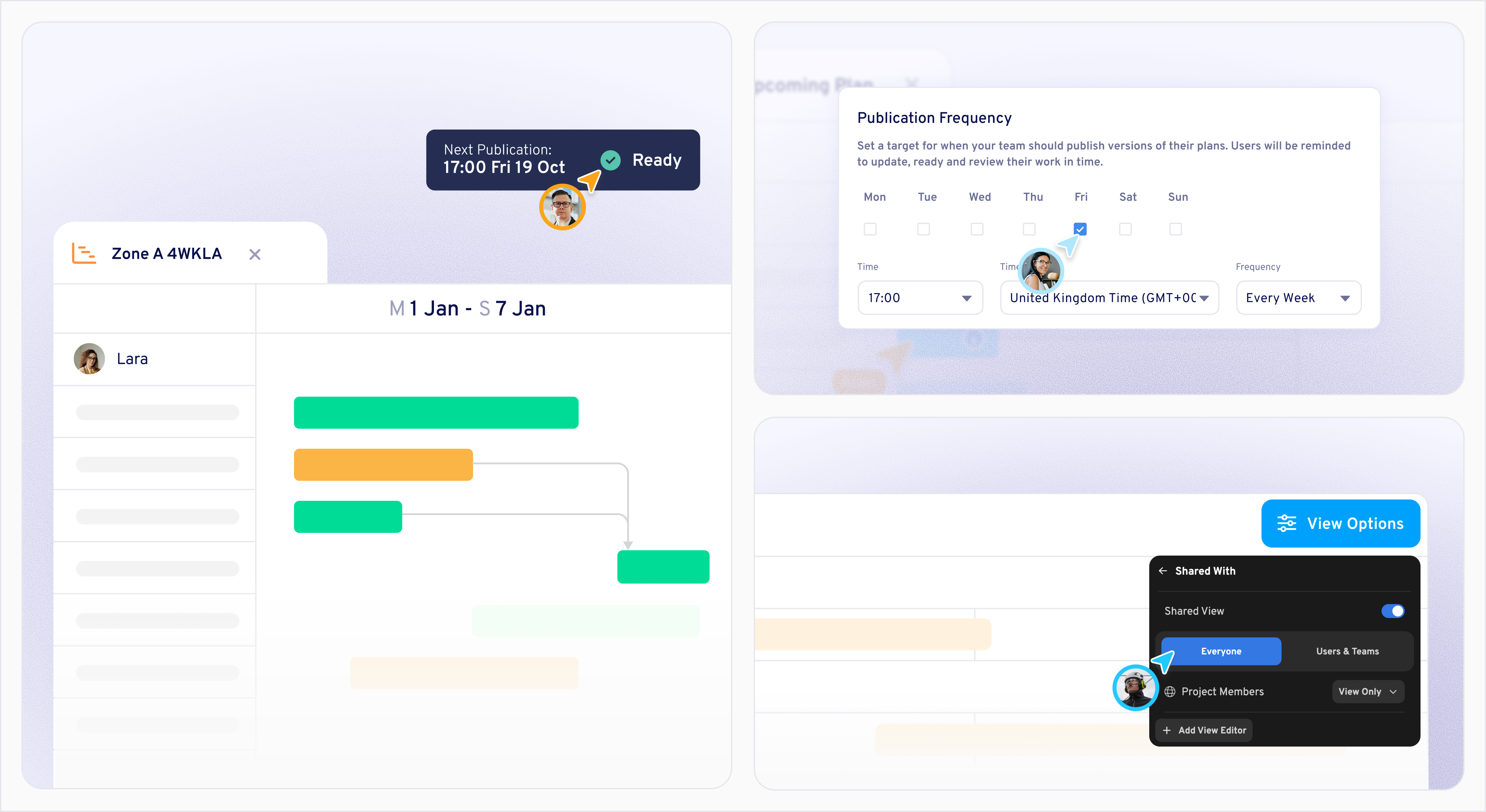
The team used Aphex's publishing feature to distribute updated plans each week. This established regular publishing cycles that create timestamped snapshots of the plan, which can be distributed to supervisors, printed for reference, or shared with external parties.
Rather than working with static PDFs or navigating complex scheduling software, suppliers could access the current plan directly through a simple interface. This meant everyone worked from the same version of the same live plan.
Distribute ownership of the plan
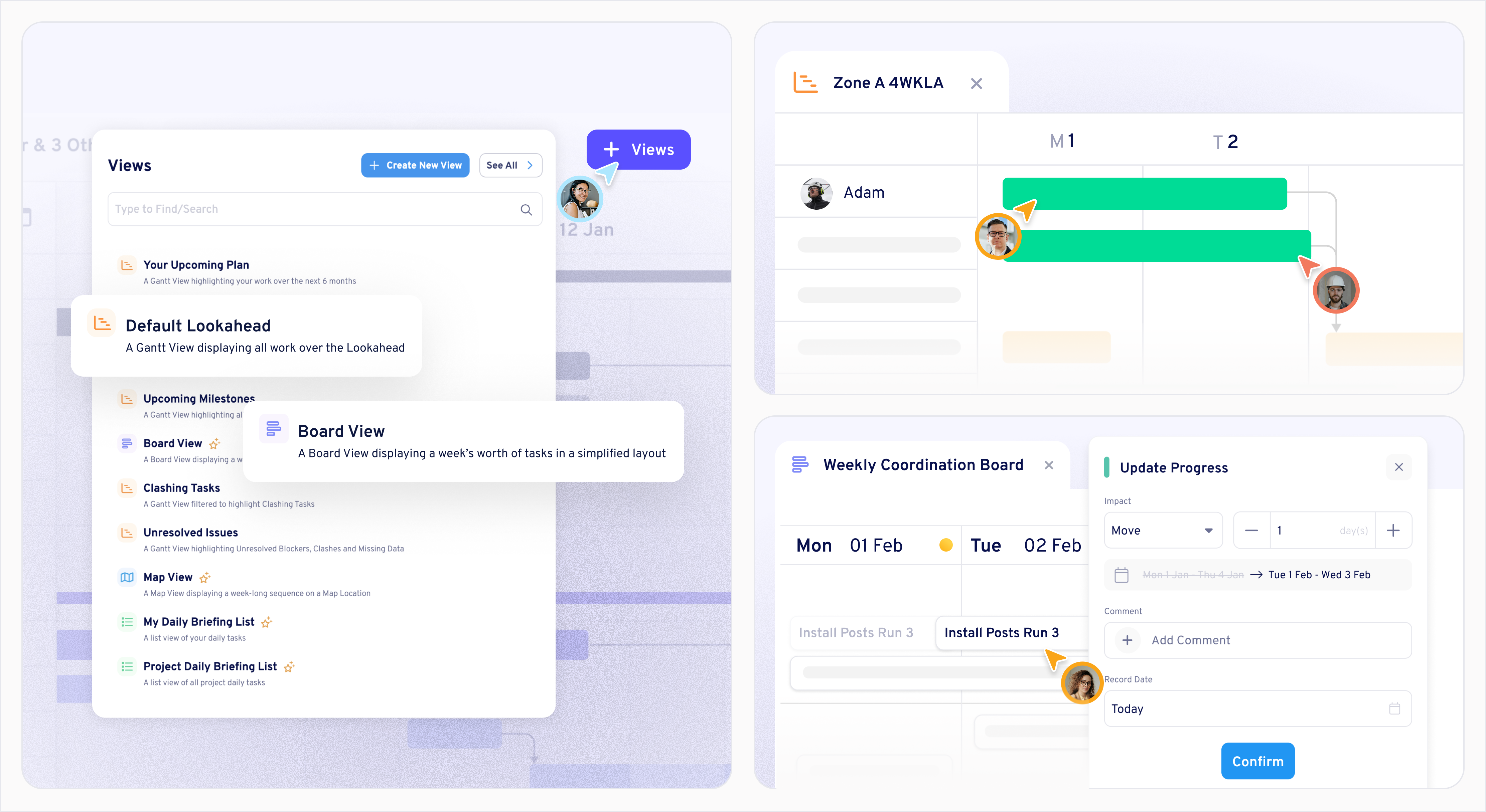
In concert with the disciplined coordination cycle, where every piece of information was carefully communicated each day, the team encouraged suppliers to own their work. When suppliers built their own plans in the system, they showed up to coordination meetings with confidence and ownership rather than disconnected from the schedule.
Traditional approaches often leave suppliers feeling like the plan is something being done to them, rather than something they're part of creating. By giving suppliers authorship over their own work packages, the team transformed the dynamic entirely.
Suppliers owned what they authored, enabling confident discussion about their plans. This transparency built trust and fostered collaborative problem-solving sessions rather than confrontational meetings.
Our suppliers owned what they wrote and authored, and they were confident enough to talk about it. If you believe in something, it's easy to work collaboratively with others on the project.
Graham Vinters, Senior Planning Manager
Getting suppliers planning with Aphex
Aphex's simplicity proved critical in securing supplier buy-in. With five minutes of onboarding, suppliers could plan their own work, even those without dedicated planners on their teams.
The system was live within one week of the first discussion. Suppliers gained confidence through owning their own plans, with one supplier developing significant planning skills over the course of the year through self-planning in the system.
Time's precious for everyone. Our suppliers are working on multiple projects. They'll only pick up a new system if it's simple, and Aphex really is simple for anyone to learn.
Graham Vinters, Senior Planning Manager
Prioritise finding and solving issues early
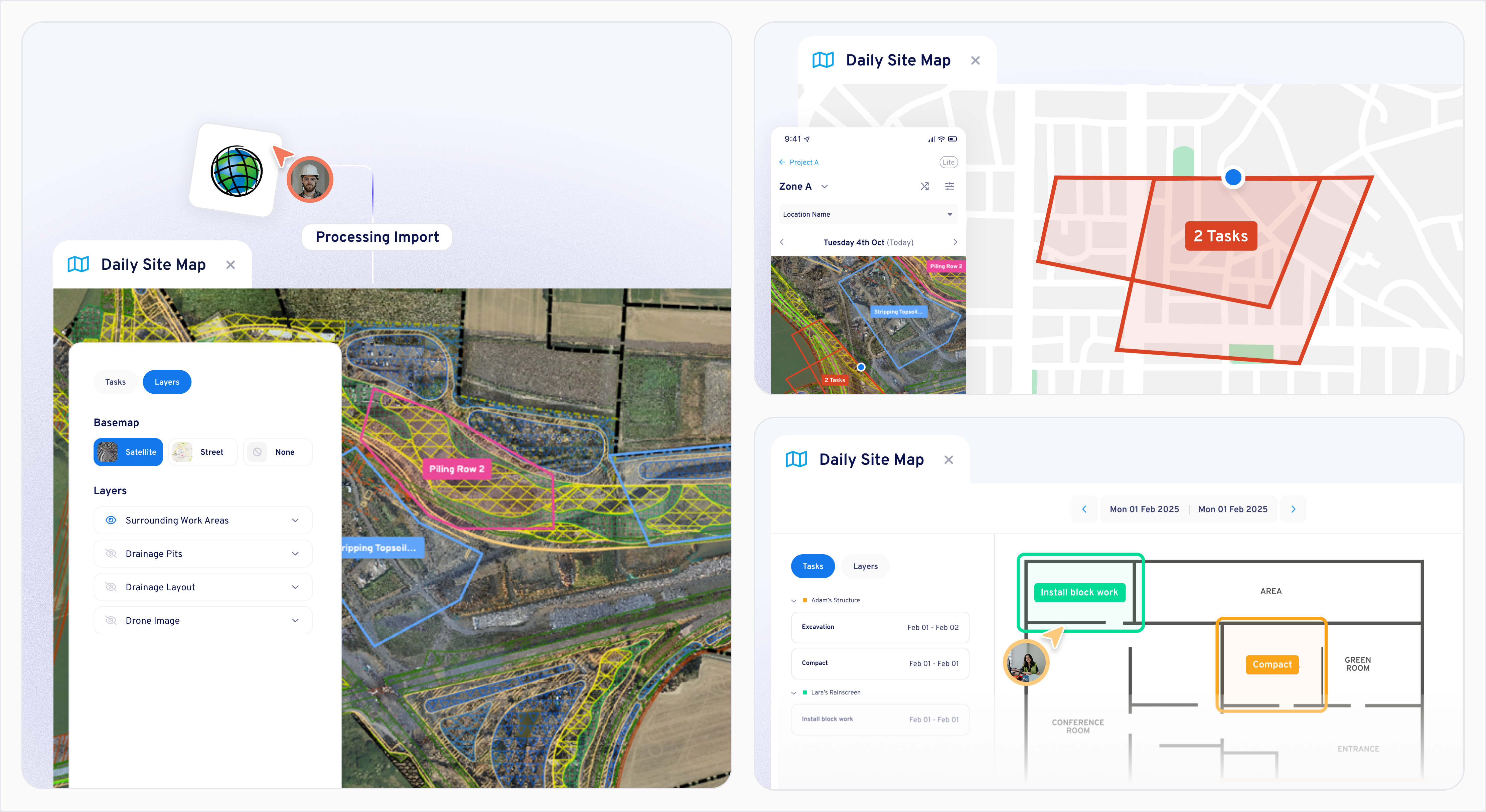
The team required suppliers to add location data to all their activities before the coordination meetings. This wasn't always natural for suppliers accustomed to thinking purely in terms of schedules, but it became a core discipline that made it much easier to spot potential clashes.
With Aphex’s automatic clash detection, it was possible to identify and work through issues in coordination meetings, rather than when crews got to site.
Critically, suppliers identified clashes themselves and brought them to the team's attention, enabling productive conversations about actual spatial conflicts. The result: the team met every single baggage access date throughout the project.
With Aphex, the team actually found the clashes themselves and brought them to our attention. As a result, we met every single access date for the baggage supplier.
Graham Vinters, Senior Planning Manager
Using the map for spatial coordination
Connect your GIS data or upload a general arrangement to Aphex to create accurate site layouts, then link planned tasks to specific locations on these maps. Use the work area overlay feature to mark out zones for different activities directly on your site map, creating a visual connection between your schedule and physical work areas.
When activities are scheduled in overlapping areas, the system visually highlights these clashes, prompting teams to discuss sequencing options before conflicts reach site.
It would have taken a lot of man-hours to do that if Aphex didn't come along. I would have resorted to creating PowerPoint slides manually, which would have required two dedicated planners and wouldn't have provided the same real-time visibility.
Graham Vinters, Senior Planning Manager
Focus on potential blockers
The two-week lookahead kept the team coordinated on immediate work, but they needed a way to spot problems before they became urgent. Eight-week blocker reviews with photo evidence allowed teams to solve problems six weeks before they became critical, preventing the reactive firefighting that can plague similar projects.
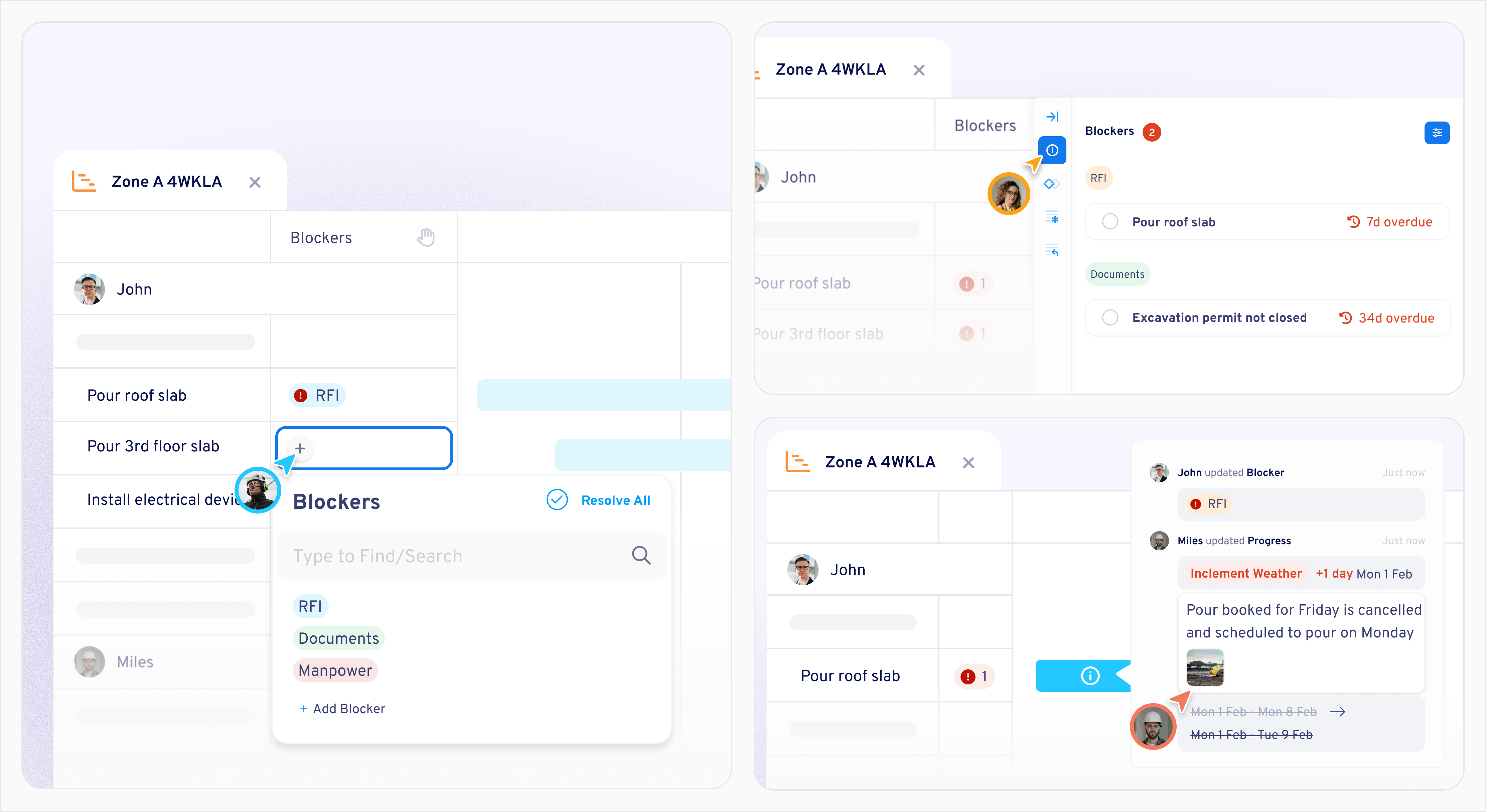
The team established an eight-week blocker window where suppliers would look at their upcoming activities and identify what was preventing progress. Suppliers backed up blockers by attaching photographs directly in Aphex.
Using filters to review constraints, the team could focus specifically on scaffold, lighting, and baggage system blockers, giving them six weeks to fix issues before they impacted the two-week lookahead.
Managing blockers with Aphex
Use Aphex's blockers feature to capture constraints as suppliers identify them during planning cycles. Suppliers can attach photo evidence directly to blocker records, providing visual context that makes the issue immediately clear to everyone reviewing it.
During constraint reviews, use filters to show only blocker tasks, allowing the team to work through them systematically without getting lost in the broader schedule. This creates a focused conversation about what's preventing progress, with all the supporting evidence in one place, meaning problems get solved weeks in advance rather than becoming emergencies in your two-week lookahead.
The results
The disciplined coordination approach delivered three major outcomes:
- 12 months early on critical phases. Phases 1-6 were completed a full year ahead of the pre-optimisation schedule, with Phase 7 delivered 5 months early compared to the baseline program. This early delivery doubled screening capacity at Terminal 4, unblocking Heathrow's expansion plans.
- Perfect coordination record. The team met every single baggage access date and critical milestone that typically slips on airport projects. The comprehensive clash detection and resolution process ensured steelwork, traditionally prone to delays, stayed on track throughout.
- Transformed team dynamics. Coordination meetings became much more collaborative than on similar projects. Suppliers arrived confident and prepared, and the team culture across the project was optimistic and upbeat.
I wish we could bottle up what the team achieved in this project and share it across all of our portfolio because it's a shining example of what we can do.
Infrastructure Director, Heathrow Airport Limited
What you can apply
Four principles other airport and infrastructure teams can implement:
- Meet suppliers where they are. Use tools they can learn in 5 minutes, not systems that require extensive training they might never receive.
- Make spatial coordination visual. Line-by-line schedule reviews don't reveal coordination problems; live maps with work areas do. Suppliers will identify clashes themselves when they can see their work in context.
- Build ownership through authorship. When people build their own plans, they show up with confidence and accountability. The team found that suppliers were more willing to stand up and discuss work they had authored themselves.
- Look ahead at blockers, not just tasks. Eight-week constraint reviews prevent reactive firefighting by solving problems before they become critical. Having six weeks to address issues means they never become emergencies in your two-week lookahead.

Heading
Lorem ipsum dolor sit amet, consectetur adipiscing elit. Suspendisse varius Duis cursus,



.webp)


%20-%20Grey.svg)