
Within five minutes in Aphex, you can have activities down, resources added, and be ready to go. It's simple by design, and that's exactly why everyone uses it.


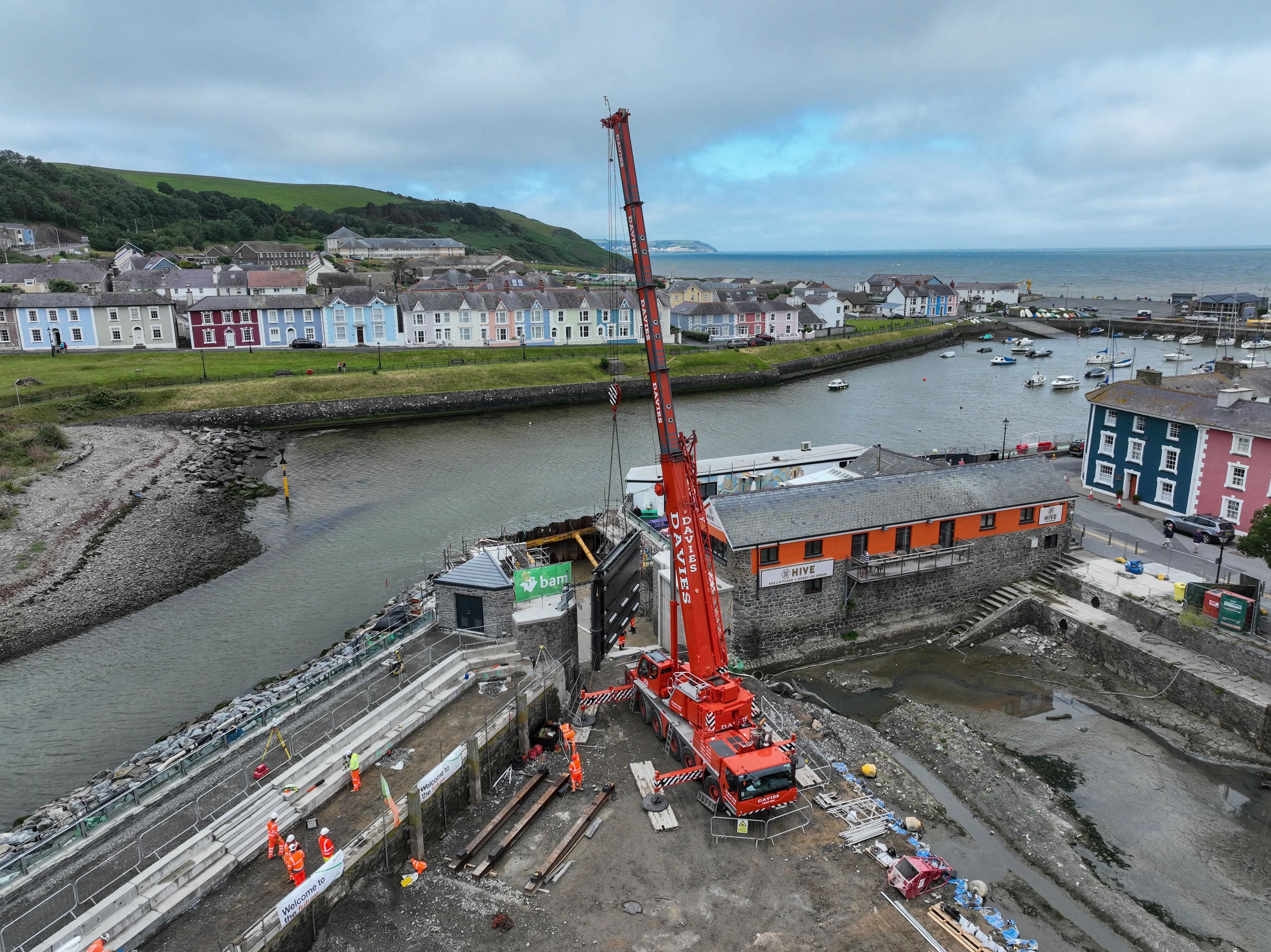
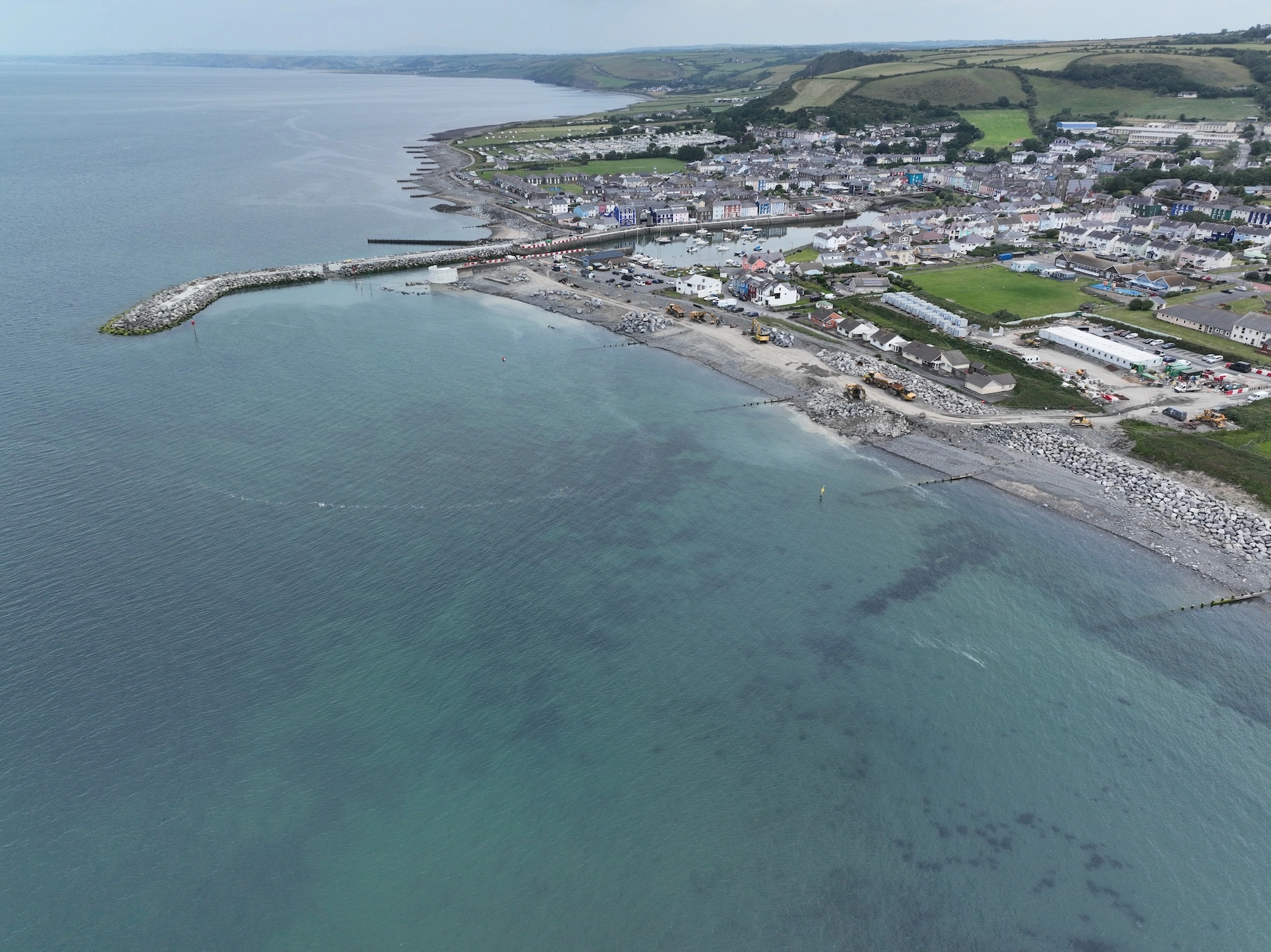
The Aberaeron Coastal Defence Scheme had all the hallmarks of a difficult project. Working on the Welsh coast, the BAM Nuttall team faced tidal windows, a program with little room for slippage, and what would turn out to be one of the wettest years in recorded history.
Despite these challenges, the team successfully delivered the project on time. The completed Coastal Defence Scheme provides flood protection for homes and businesses while also protecting against predicted sea-level rise.
We spoke with Niki Lewis and John Cheval, both Planning Engineers, who together led the planning and delivery efforts for an experienced, dedicated BAM Nuttall team.
What they describe at Aberaeron is a disciplined, methodical approach to short-term planning that gave the team control in difficult conditions.
The challenge: staying in control on a tidal, weather-exposed site
Coastal defence work is unforgiving. Activities are tied to tidal windows, so a delayed start can result in losing the opportunity entirely until the next viable window. With one of the wettest years on record adding further disruption, the BAM Nuttall team was constantly replanning in response to conditions beyond their control.
That unpredictability made the planning routine critical. The team needed to know, at any given point, exactly where they stood against the program. Without a clear picture of what was causing delays, it would be difficult to raise early warnings and compensation events at the right moment.
There was also the question of keeping the wider team aligned. Traditional approaches, such as spreadsheets, mean the plan is always slightly out of date for someone. On a project where decisions needed to be made quickly and collectively, that lag would have real consequences.
The information in the short-range plan is only as good as the information you put into it. If I can't rely on the as-built information being 100% right, I won't use it.
Niki Lewis, Planning Engineer, BAM Nuttall
Establish a disciplined weekly planning rhythm
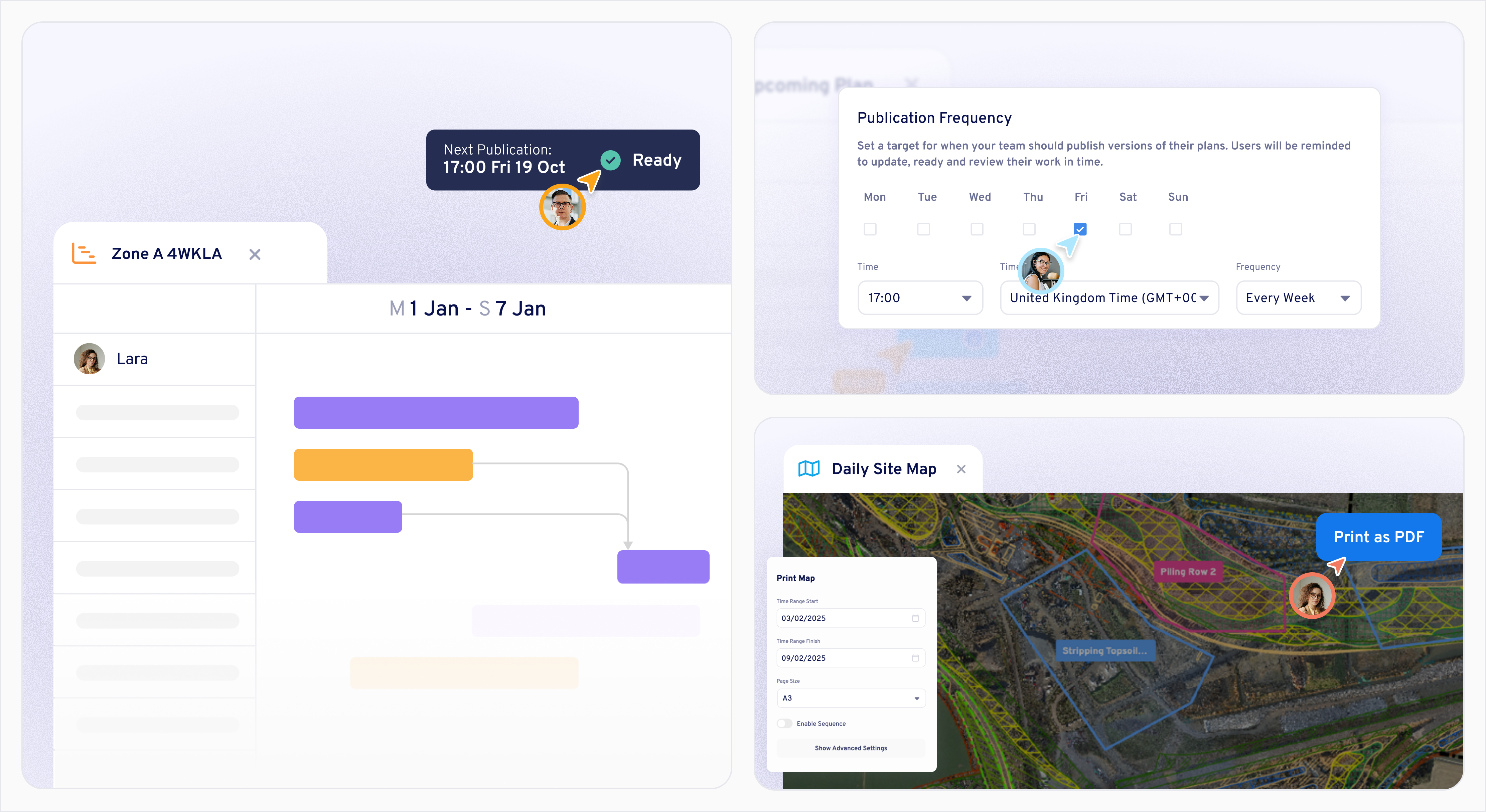
The team ran a consistent weekly cycle throughout the project. Each week, the team would gather to review what had been delivered against the previous week's plan and agree on their upcoming short-range plan. The conversation was grounded in the live plan, updated in real time in front of everyone, so that any challenge to a start date or duration was immediately visible to the whole group.
Crucially, the plan was published on a regular cadence. That meant the team produced a timestamped snapshot of the agreed program, which acted as a record of what the team committed to, and when. Over the course of the project, those published versions built into a clear picture of how the programme had evolved and why.
On a coastal scheme with tidal constraints and unpredictable weather, that rhythm gave the team a shared, agreed baseline they could return to each week, regardless of what had changed on site.
With Aphex, everyone's in the same space, looking at the same plan. The moment something changes, the whole team sees it. That's what makes it work.
Niki Lewis, Planning Engineer, BAM Nuttall
Running weekly planning routines with Aphex
Require your team to finalise their short-range plan each week. This can include ‘promising’ the next one or two weeks of work. Tasks that are promised cannot be changed without providing a delay reason.
Once the short-range plan for the week is finalised, click Publish to create and distribute a timestamped snapshot of your program. This creates an automatic audit trail of the plan's evolution. It also gives the wider team certainty about the upcoming week’s work and provides a basis for discussion and problem-solving during daily standups and weekly planning meetings.
Within five minutes in Aphex, you can have activities down, resources added, and be ready to go. It's simple by design, and that's exactly why everyone uses it. We even had our foreman using it, which never happens with other software we’ve used.
Niki Lewis, Planning Engineer, BAM Nuttall
Build a delay record worth trusting
In a project like the Aberaeron Coastal Defence Scheme, plans are always going to change. With inclement weather, changing tides, and many other interdependent moving parts, delivery always needs to be discussed and reprioritised.
But as the team knew from prior experience, changes to the plan need to be tracked at all points. This is why the team made a discipline of capturing delays against activities as they happened, week by week. Crucially, the team drew on decades of civil engineering experience to define those categories before delivery began.
Concrete delivery was a known pressure point on previous jobs; marine rock logistics and gang-size reduction were specific to the realities of coastal work. By the time the project started, the delay log already reflected how the job would actually run.
The result was a live audit trail that built naturally as the project progressed, so the team never had to scramble to reconstruct events when a compensation event needed to be raised. They already knew what had happened and when, because they'd been recording it all along.
Because we'd been building that delay record all along, we had everything we needed. We hit our Compensation Events as we should.
John Cheval, Planning Engineer, BAM Nuttall
.webp)
Capturing delay reasons with Aphex
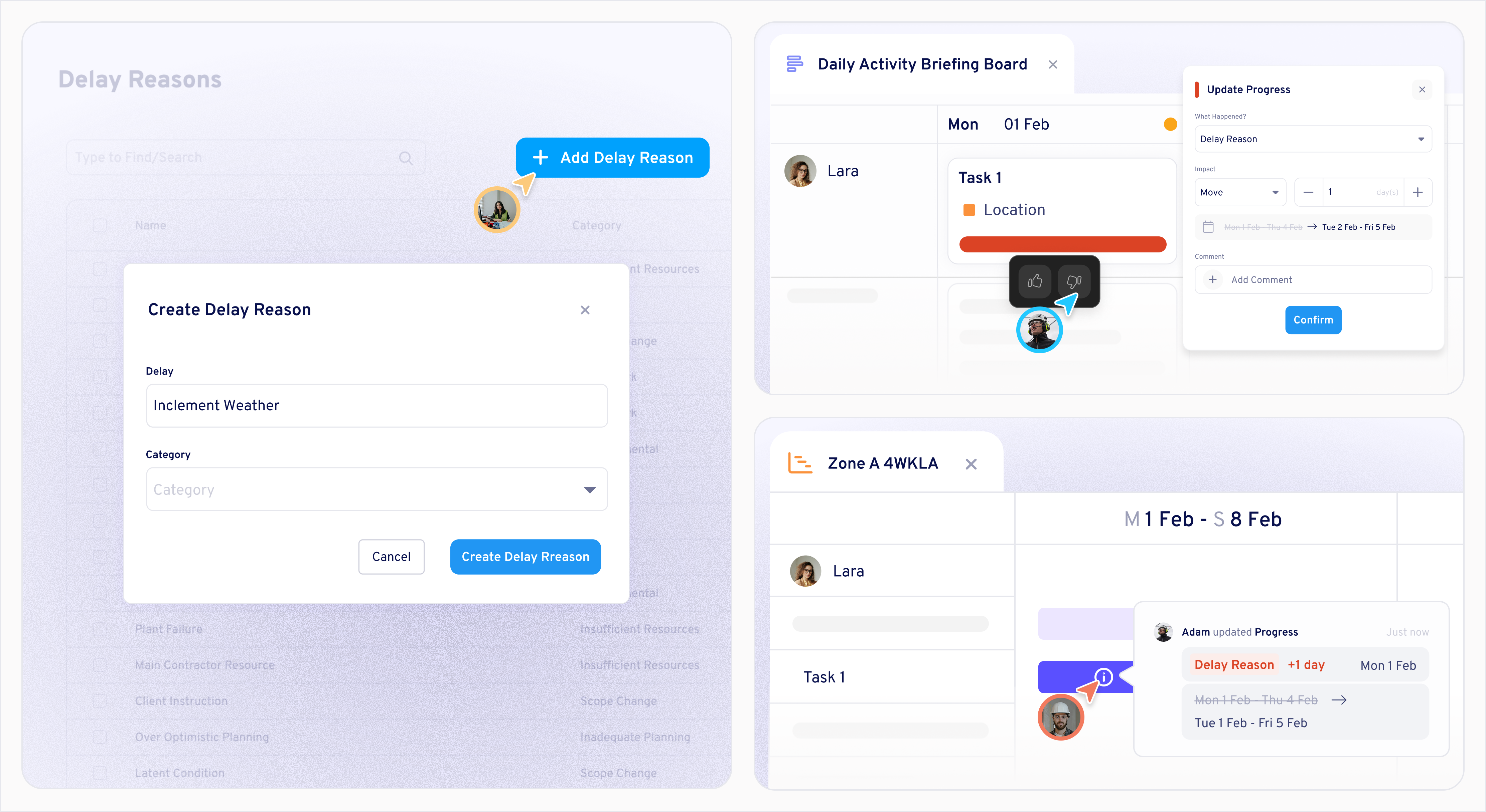
Before the project starts, customise Aphex's delay reason list to reflect the specific risks your project faces. On Aberaeron, that meant rock delivery, marine access, and gang size reduction sat alongside weather as first-class delay categories from day one.
It is critical to build delay capture into the weekly rhythm. When activities are moved or marked incomplete, the team records the reason directly against the task. Over time, this creates a pattern of evidence that supports early problem-solving and compensation events.
If we went into a claims dispute at the end of the job, Aphex would be one of the as-built records we'd be digging up. In the end, we had our account settled on the final planned completion day. Aphex helped with that.
John Cheval, Planning Engineer, BAM Nuttal
The results
The disciplined planning approach at Aberaeron delivered across both delivery and commercial outcomes.
- Settled on the final planned completion date. The project account was settled on the final planned completion date. The as-built record developed in Aphex throughout the project provided the evidence they needed to resolve the commercial account cleanly.
- Broad team engagement with the plan. Weekly planning sessions brought the whole team into the same conversation, reviewing progress and agreeing on the look-ahead together. Everyone could see the same plan and challenge it, which meant decisions were made collectively rather than handed down.
- A delay log that the team actually trusted. With around 20 project-specific delay categories, shaped by John’s experience, the team had a granular, accurate picture of what caused slippage and when.
- Broader engagement with planning. The process used on the project drew in the wider team, not just the planners. Even the foreman was actively engaging with the plan Aphex, something Niki noted rarely (if ever) happens on other projects.
Aphex provided great support throughout the project. If you ask a question of support, you’ll get an answer from a human being within a minute. You just wouldn't get that level of support from other software companies.
Niki Lewis, Planning Engineer, BAM Nuttall

Heading
Lorem ipsum dolor sit amet, consectetur adipiscing elit. Suspendisse varius Duis cursus,

.webp)

.webp)